Skip to content
Hardwood Flooring

Hardwood Flooring

Real wood is still the floor a lot of Fort Bend homeowners picture when they think about the house they want. Our hardwood flooring installation starts with an honest look at what is under your home, because on a concrete slab the right answer is usually engineered hardwood, and getting that decision right matters more than any stain color.

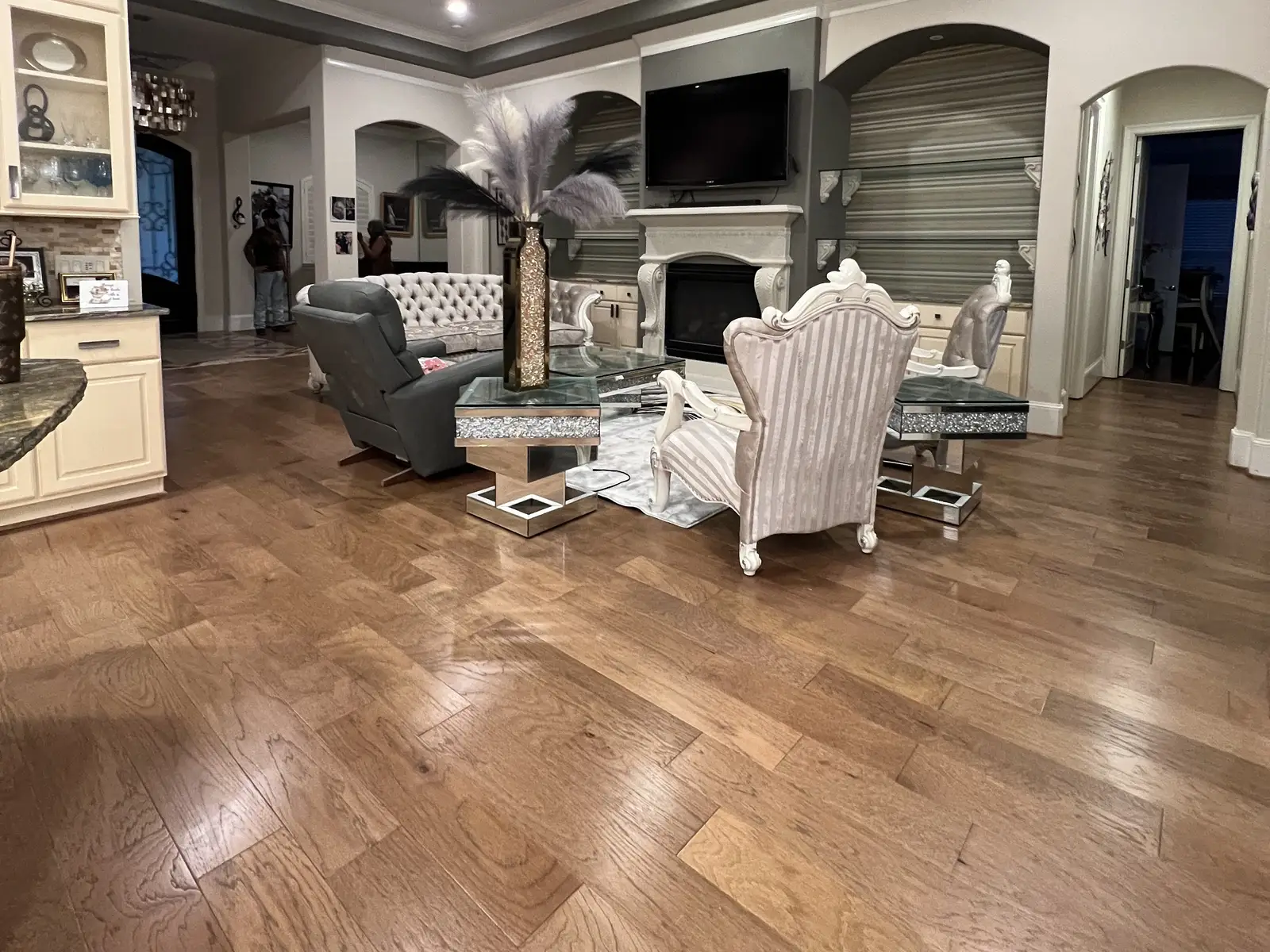
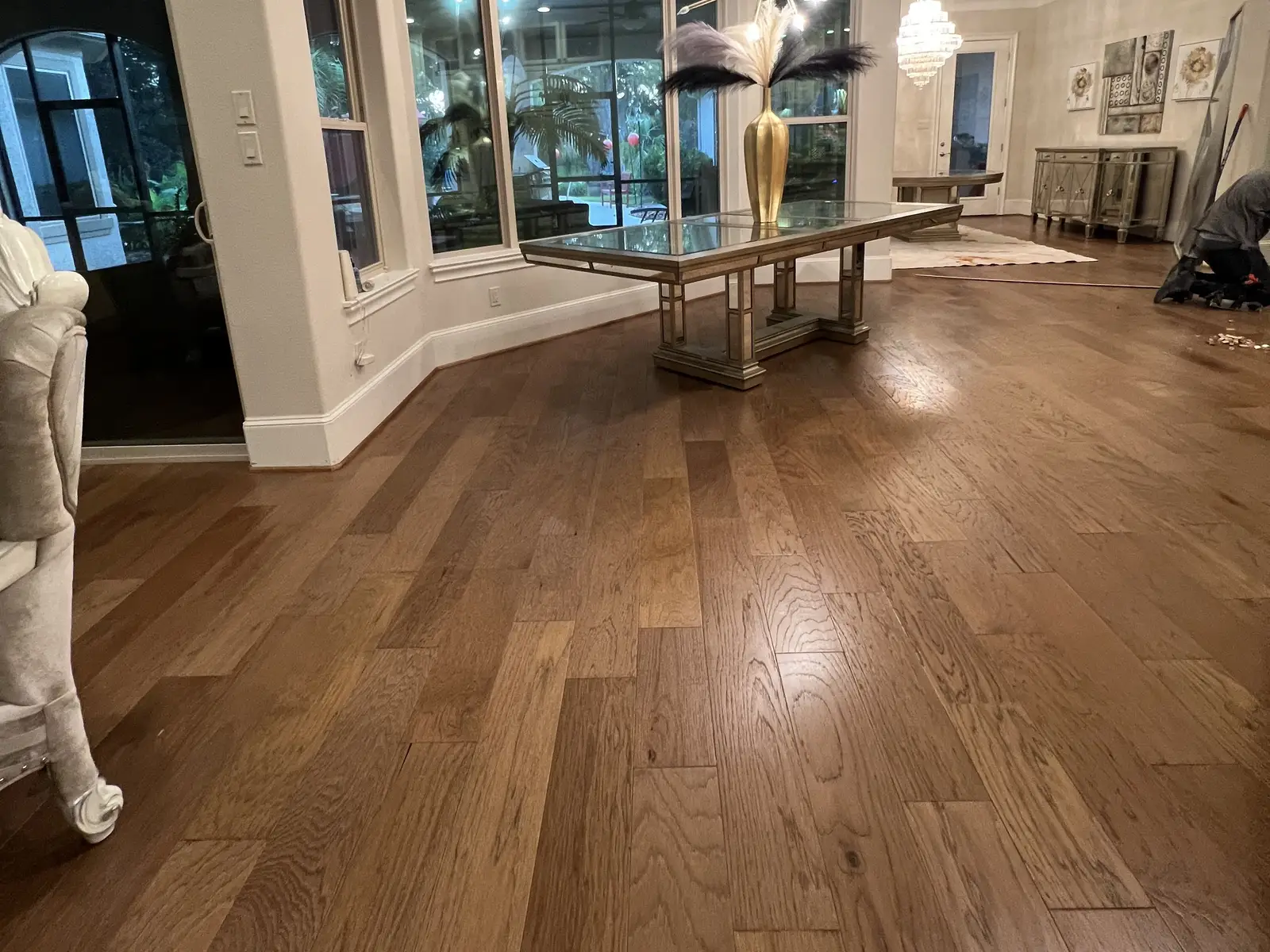
Wide-plank hardwood floor in a furnished family room
The slab question

Why most of our hardwood jobs are engineered

Start with what is under the house

Drive through Cinco Ranch, Sienna, Pecan Grove or most neighborhoods in Fort Bend County and nearly every house you pass sits on a concrete slab. That one fact shapes the whole hardwood conversation. Traditional solid hardwood was built for wood subfloors, nailed down plank by plank. A slab has nothing to nail into, and concrete can carry moisture up from the ground for as long as the house stands.

That is why we lead with engineered hardwood for slab homes. It is real wood on top, with a cross-layered core underneath that resists the swelling and shrinking that a solid board goes through. It can be glued straight to a properly prepared slab or floated over a moisture barrier, and it gives you the look and feel of a hardwood floor without fighting the foundation.

Humidity does the rest of the work

Even inside an air-conditioned house, the Gulf Coast air shows up in the floor. Wood takes on moisture when the air is damp and gives it back when the air is dry. With solid boards, that movement shows up as gaps between planks in the drier months or edges that curl up, called cupping, when moisture builds. Engineered wood moves far less, which is a big part of why it has become the practical choice around here.

None of this means solid hardwood is off the table. In a home with a raised wood subfloor, or on an upper floor built with plywood, solid wood can be a great choice and we install it. We just want you choosing it for the right house, not because it was the first sample you saw.

The best hardwood floor is the one that still looks right after ten Houston summers.

What's included

  • Solid and engineered hardwood
  • Slab moisture testing before install
  • Glue-down and floating methods
  • Matching new wood to existing floors
  • Stairs, nosing and transitions included in the plan
  • Lifetime Installation Guarantee
Where it goes

Living areas, bedrooms, and floors that need to match

Main living areas

Living rooms, dining rooms and open family spaces are where hardwood earns its keep. A wider plank in a lighter, natural tone has been a popular look in newer west Houston and Fort Bend homes, while darker, narrower boards suit more traditional rooms. We help you weigh how a finish will show dust, scratches and pet traffic before you commit, not after.

Upstairs and bedrooms

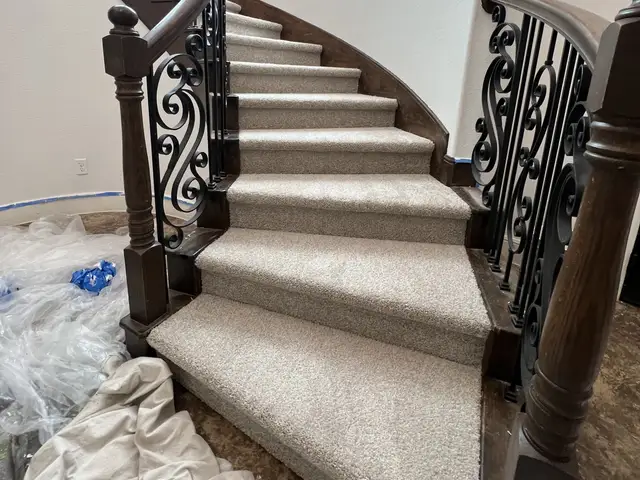
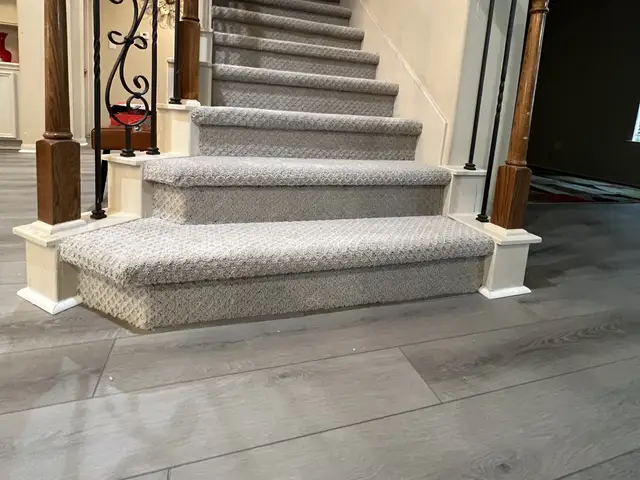
A lot of two-story homes in the area were built with carpet upstairs and hard surfaces down. Many homeowners now want wood continuing up the stairs and into the bedrooms. Upper floors are usually built on wood subfloors, which opens up more options, and we plan the stair treads, nosing and landing so the whole run reads as one floor.

Matching what you already have

Some of our favorite jobs are the ones where new wood has to sit next to old. Maybe the downstairs already has hardwood and the upstairs is getting it now, or an addition needs to tie into the original rooms. Matching species, plank width, color and sheen takes patience and good samples. Because we bring the showroom to your home, you can hold options against the existing floor in your actual light before deciding.

Where a true match is not possible, we will say so and plan a deliberate break, like a threshold at a doorway or a change in direction, so the difference looks intentional.

Where we steer you elsewhere

Full bathrooms, laundry rooms and spots near exterior doors that see rain and pool water are hard on any wood floor. In those rooms we will usually point you toward tile or luxury vinyl plank, and we can make the transition between materials look clean.

A lot of two-story homes in the area were built with carpet upstairs and hard surfaces down.
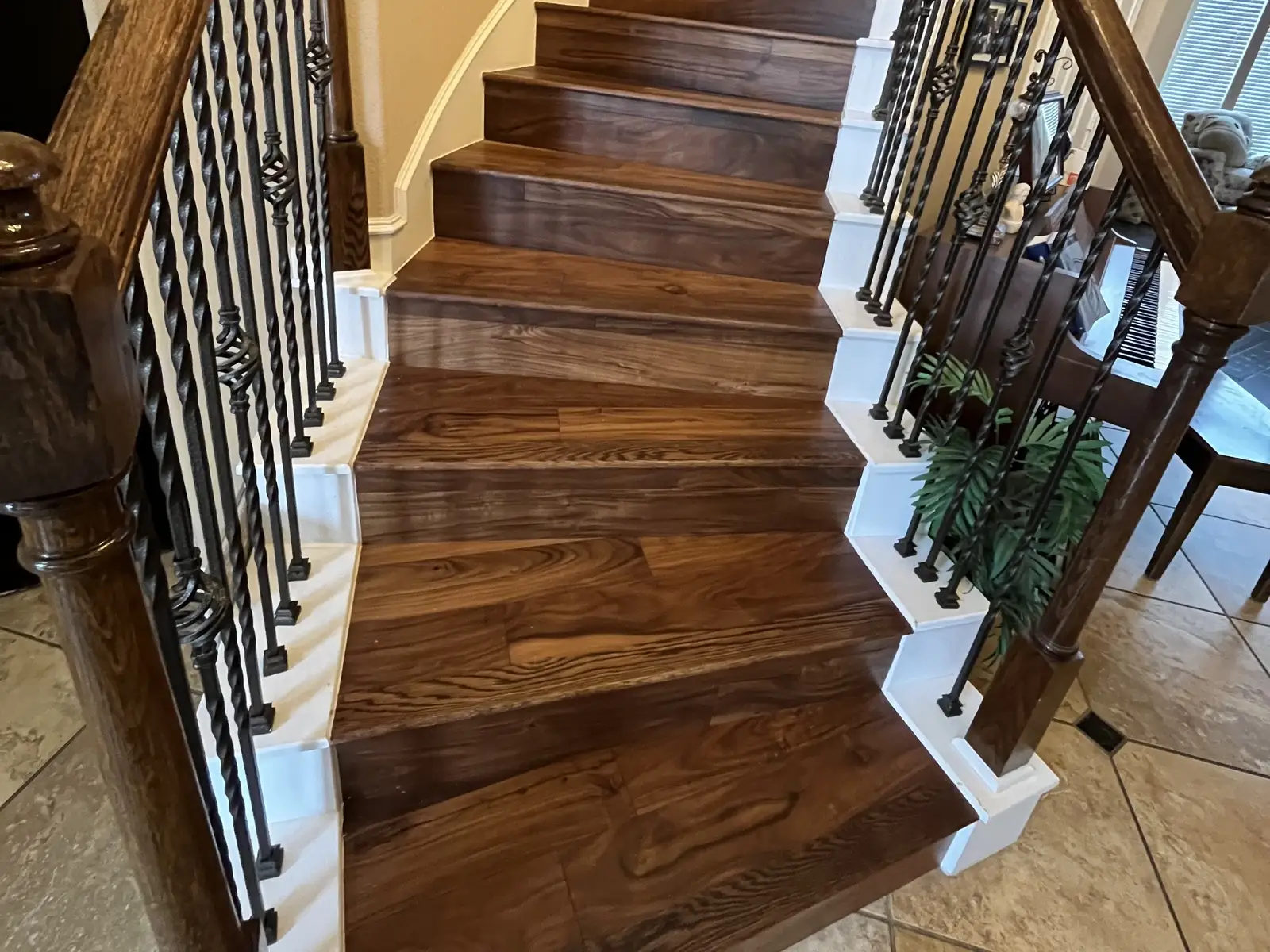
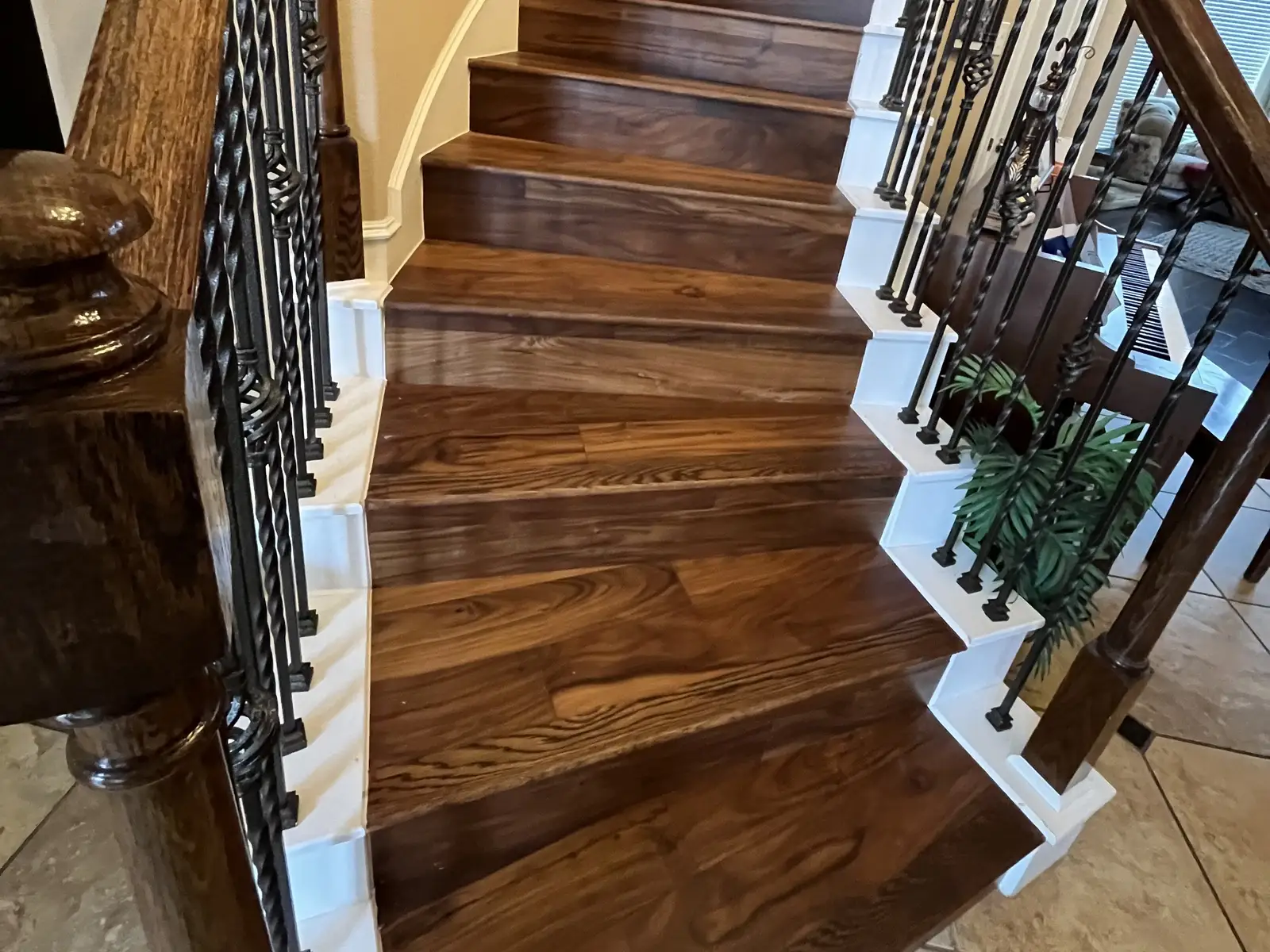
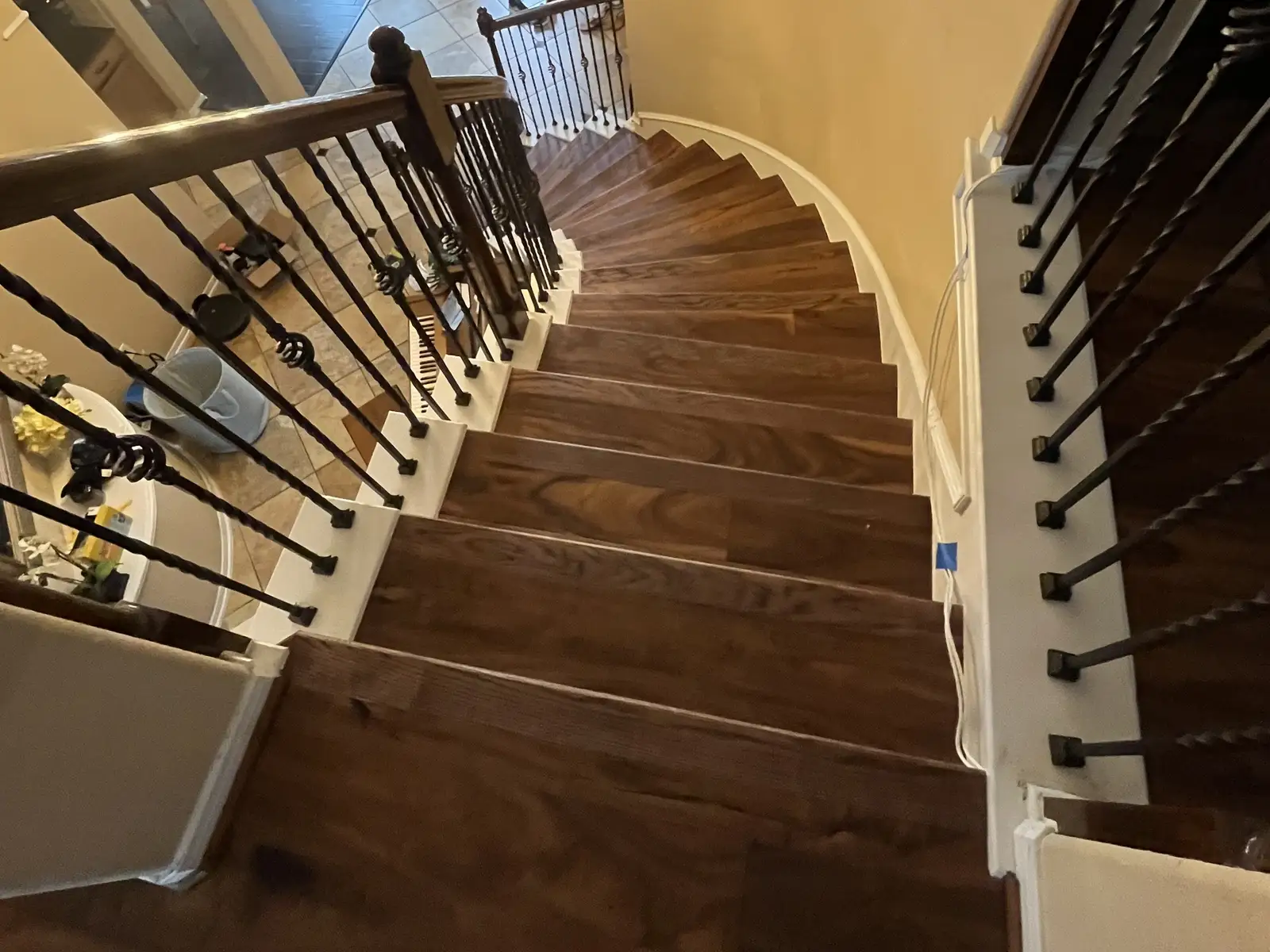
Curved staircase with dark-stained hardwood treads and iron balusters
Recent installs

Hardwood Flooring we've installed

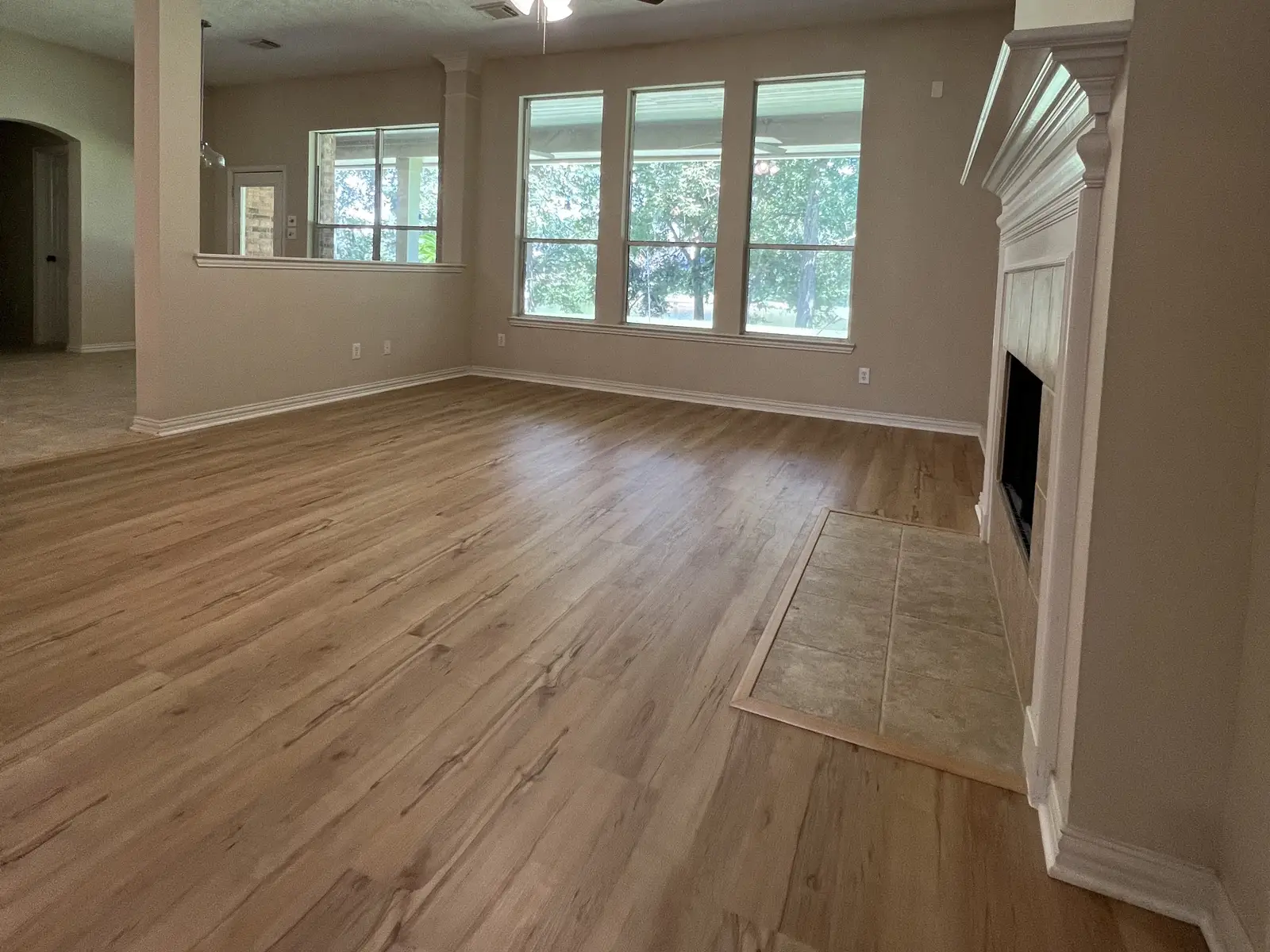
  • Hardwood floor in a living room with a fireplace
  • Dark-stained hardwood on a curved staircase
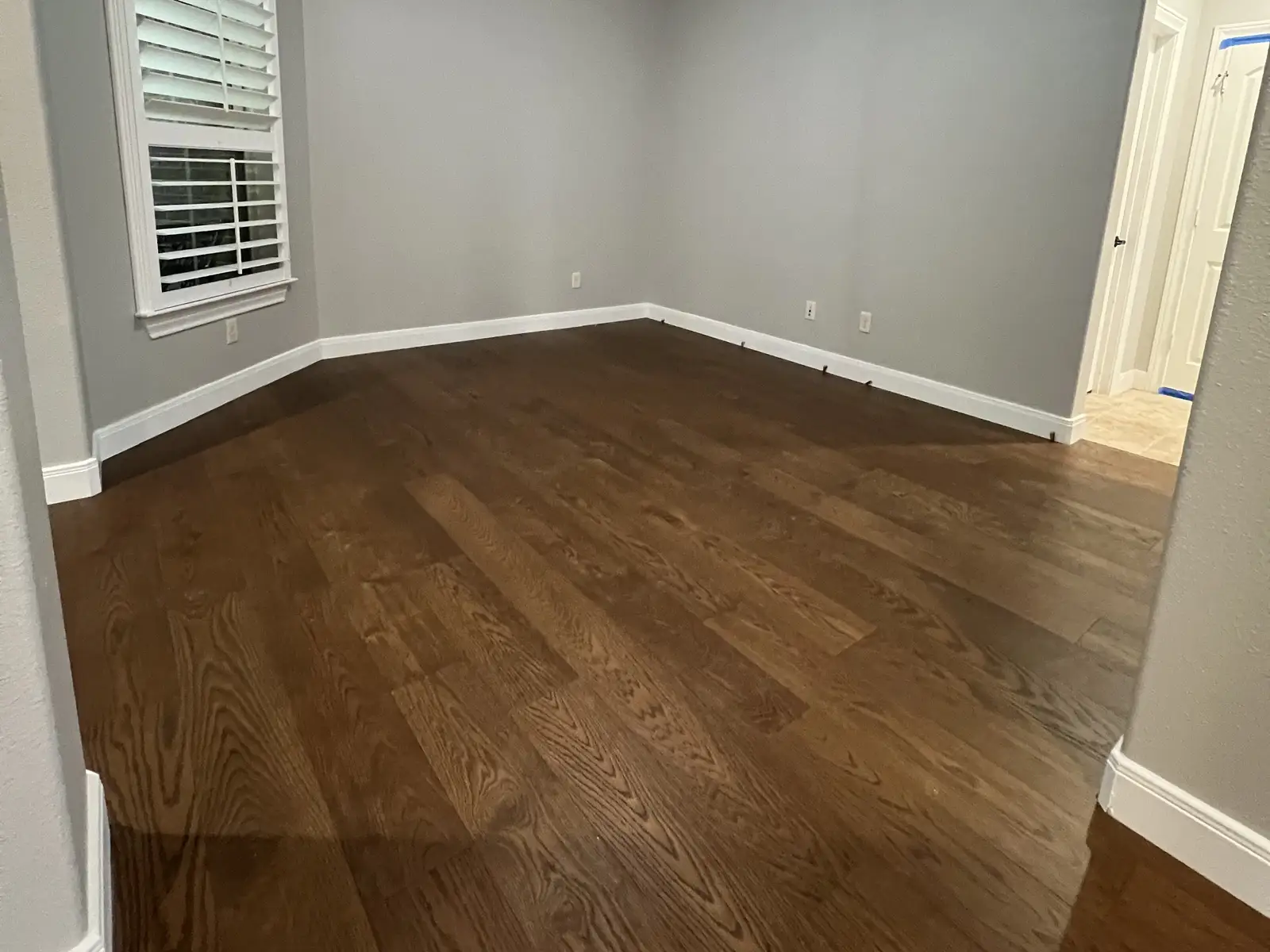
  • Hardwood floor in a dining room with plantation shutters
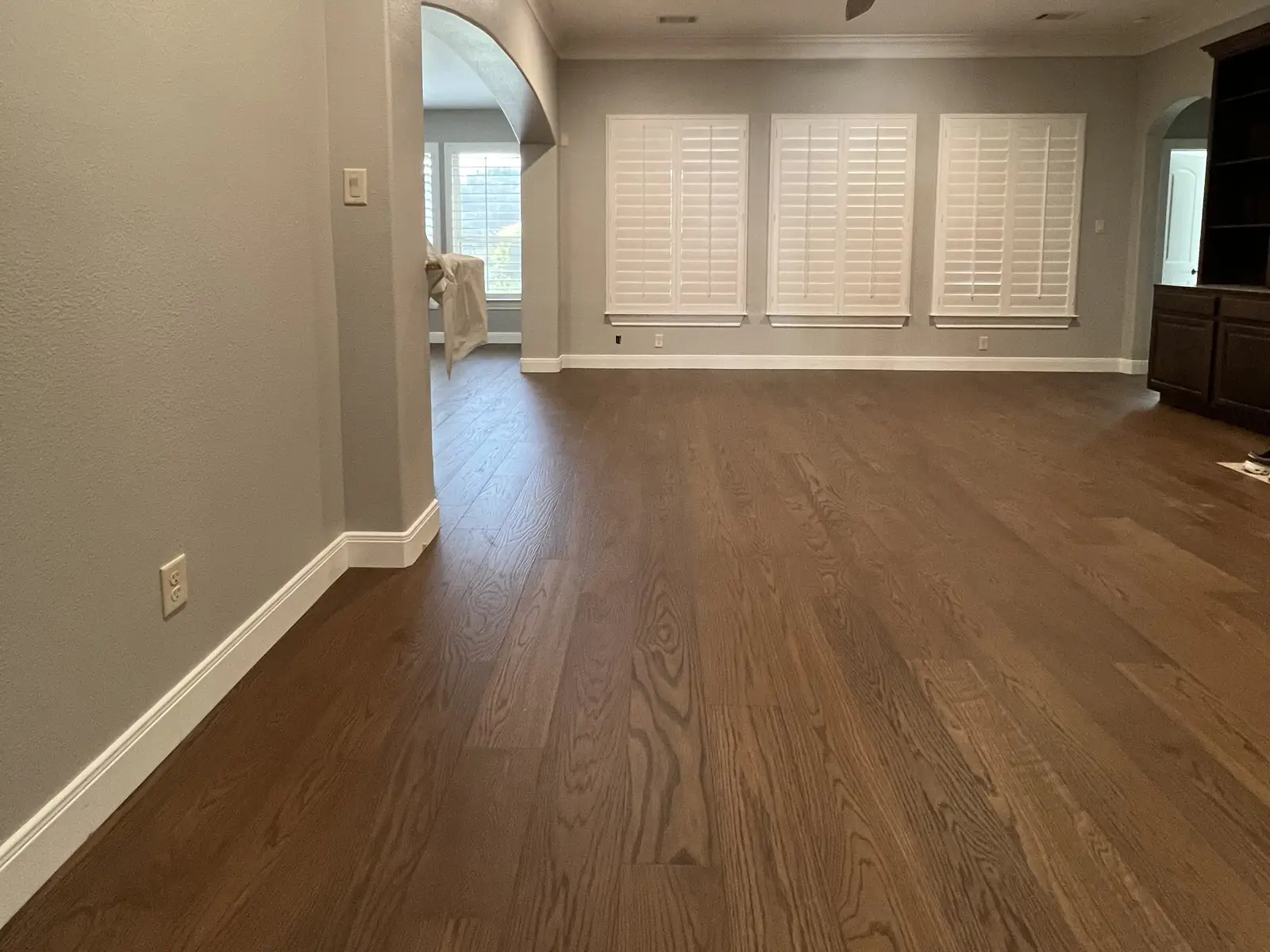
  • Hardwood floor in a great room with shuttered windows
  • Hardwood staircase seen from the upstairs landing
  • Hardwood flooring in a closet
  • Bright hardwood flooring in a living room
  • Spacious hardwood flooring in a kitchen
How we install it

The steps that decide whether a hardwood floor lasts

Moisture testing the slab

Before any wood goes down on concrete, we check the slab for moisture. A slab can look and feel dry and still push enough vapor to damage a floor over time. The results tell us which adhesive, barrier or installation method fits, and they are part of what lets us stand behind the work with our Lifetime Installation Guarantee.
Flatness and slab movement

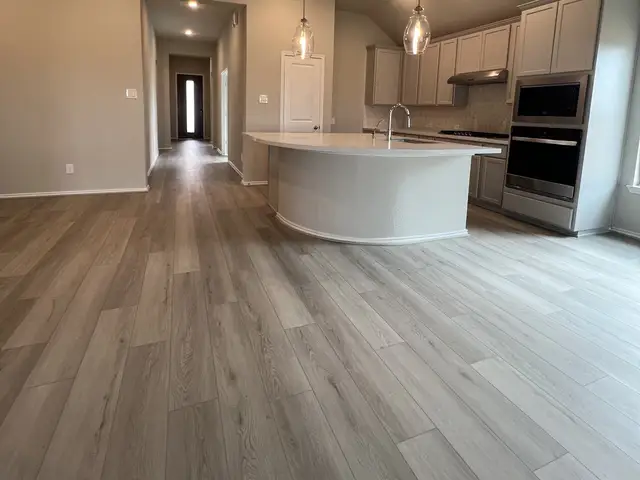
Fort Bend sits on Gulf Coast clay that swells when it is wet and shrinks when it dries, and slabs move with it. Small cracks are common and usually not a concern for the floor, but dips, humps and ridges are. Wood needs a flat base, so we check the slab with a straightedge and grind high spots or level low ones before installing. Skipping this step is one of the most common reasons a wood floor sounds hollow or feels soft underfoot.

Acclimation and expansion space

Wood is delivered and allowed to adjust to the conditions in your home before installation, following the manufacturer's guidance. We leave the expansion space around the edges that every wood floor needs, hidden under baseboard or quarter round, so the floor has room to move with the seasons instead of buckling against the walls.

Glue-down or floating

Glue-down installation gives engineered wood a solid, quiet feel that is close to a nailed floor, and it is our usual approach on a slab in good condition. Floating installation, where the planks lock together over an underlayment, can make sense in some homes and with some products. We explain the tradeoffs in plain terms at your free in-home estimate and put the method in writing, along with the trim, transitions and removal of your old floor.

Fort Bend sits on Gulf Coast clay that swells when it is wet and shrinks when it dries, and slabs move with it.
Hardwood floor through an open living and dining room
Reviews

What homeowners say

  • "If you need flooring work done, hire Next Floors immediately! Working with the owner, Jose Garcia, was an incredible experience. Jose removed the entire upstairs flooring and replaced it with wood that matches our downstairs perfectly, along with installing brand new carpet on the stairs. The result is pure perfection! Jose is beyond trustworthy and honest, and he truly takes pride in his work. He offered a fantastic, high-quality product and executed our agreed-upon plan to absolute perfection. The craftsmanship, precision, and care were top-tier. We couldn't be happier with our transformed home!"
    The Severin Family · via google
  • "We had a great experience with Next Floors installing a carpet runner on our stairs. Jose, our sales representative, was fantastic—very prompt, professional, and clear throughout the entire process. He provided straightforward estimates for both cost and timing, and they were even able to work us into their schedule on very short notice. Joe, our installer, was equally impressive. He came well prepared, worked efficiently, and did an excellent job with the installation. The finished runner looks fantastic and really transformed the stairs. Great service from start to finish. I would highly recommend Next Floors for anyone looking for quality carpet installation and excellent customer service!"
    Craig Albritton · via google
Hardwood Flooring

Hardwood Flooring questions

Can you put hardwood on a concrete slab?

Yes, and most of the homes we work in are on slabs. In nearly every case we recommend engineered hardwood, either glued directly to the slab or floated over a moisture barrier. Solid hardwood is designed to be nailed to a wood subfloor, and a bare slab gives it nothing to hold onto and a steady source of moisture underneath.

Is engineered hardwood real wood?

Yes. The surface you walk on is a layer of real hardwood, bonded to a stable core made of cross-layered wood. That core is what lets it handle humidity and slab conditions better than a solid board. Once it is down, most people cannot tell the difference by looking at it.

Can you match new wood to the floor I already have?

Often, yes. We have matched new wood upstairs to existing floors downstairs and continued floors into new rooms. We bring samples to your home and compare them in your own light. An exact match is not always possible with older or discontinued products, and if that is the case we will tell you up front and suggest a clean transition instead.

Do you work on old hardwood floors?

No. We are an installation company. We install new hardwood, including taking out the old floor first, but we do not patch, resurface or restore existing wood floors. If your current floor just needs a refresh, a specialist in that work is the right call.

How long does a hardwood installation take?

A few typical rooms are often done in two to four days once the material has acclimated, though larger homes, stairs and slab prep add time. We give you a clear schedule at your free in-home estimate so you know what to expect before anything is ordered.

Flexible financing available

Flexible payment plans for qualified customers, subject to credit approval. Minimum monthly payments required.

See financing options

Ready for your free in-home estimate?

Free in-home estimate, clear pricing, and a crew that shows up when we say we will.

Call Now Free Estimate